Dark Sky Europe 2026 — Silent Nights at the Continent's Best Stargazing Parks
Dark sky Europe 2026: the best stargazing parks and dark sky reserves in Europe — Alqueva, Pic du Midi, Teide, Kerry and more. Practical guide, budget and silent-night itineraries.
Dark Sky Europe 2026 — Silent Nights at the Continent’s Best Stargazing Parks
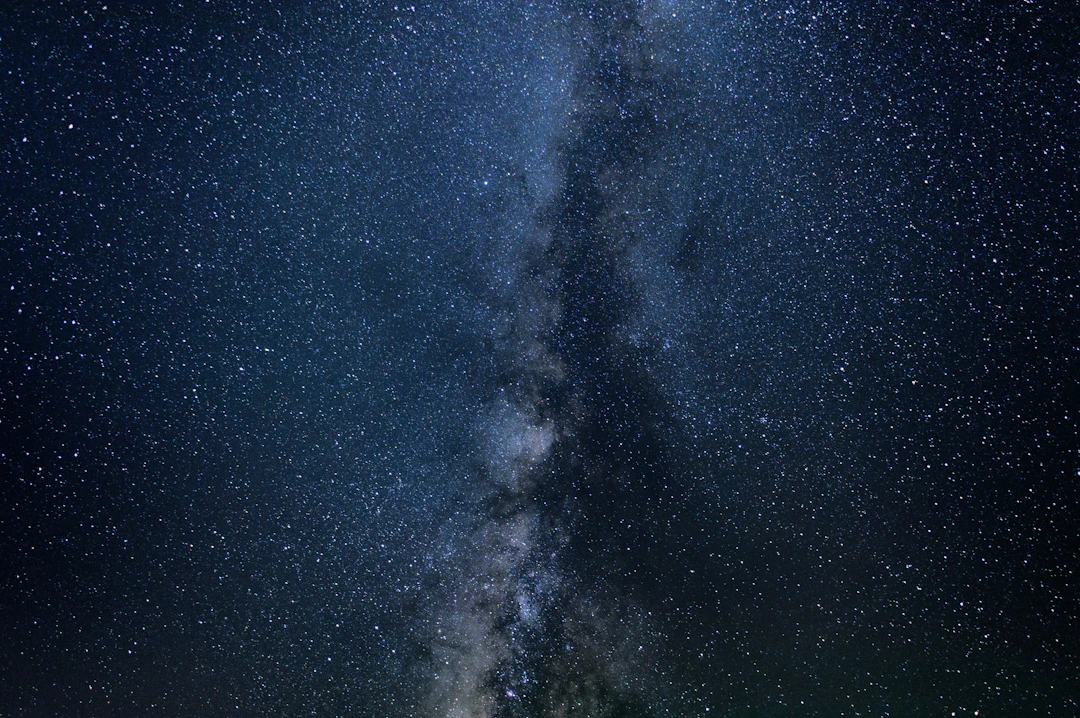
There is a form of travel that begins at 10 p.m. and consists of doing nothing but walking into the dark. Noctourism — travelling for the night rather than the day — is the quietest revolution of 2026: according to industry research, 67% of travellers now plan at least one stargazing or night-time activity on their trips, while North America holds about a third of the astrotourism market and Japan has seen interest grow by 62%. For the GlobalSilentWalks community, no trend could be more natural: silence and darkness belong together, and Europe’s certified dark sky parks are the perfect places to practise both.
This guide covers the best dark sky stargazing spots in Europe for 2026, ranked with fresh data from the first edition of the Accor Dark Sky Index (May 2026), plus budgets, a 48-hour template and the mistakes to avoid.
Why 2026 is the peak year for silent nights
The astronomical calendar is unusually generous in 2026. The Perseids meteor shower peaks on August 12, with up to a hundred meteors per hour under a dark sky; Venus shines brilliantly in the evening; and the summer’s eclipse season has put the night sky on front pages across the continent. Add to this the fact that more than 80% of the world’s population lives under light-polluted skies, according to the International Dark-Sky Association, and you understand why certified dark zones are suddenly the most desirable overnight destinations in Europe.
Related read: Total Solar Eclipse 2026 in Spain — Complete Travel Guide.
✨ The real night begins where the last streetlight ends.
Star-bathing at Alqueva, Portugal — the number one night in Europe
The Alqueva Dark Sky Reserve, in the Alentejo region, is the first destination in the world to receive the Starlight certification under the UNESCO-endorsed Starlight Foundation label. It covers roughly 10,000 km² across eleven Portuguese municipalities — and the reserve extends across the Spanish border into Extremadura. With about 286 clear nights per year, it is statistically the most reliable dark zone in western Europe.
The phenomenon that made Alqueva famous in 2026 is star-bathing: floating in the dark on a dedicated 10,000 m² water mirror while the Milky Way rotates overhead. The Accor Dark Sky Index ranks Alqueva as Europe’s warmest stargazing destination, with about 16 °C at midnight — a decisive argument for anyone who dislikes shivering under the stars.
Related read: Top Slow Travel Destinations in 2026.
💡 Pro tip: the villages of Monsaraz and Monforte are the best bases — a guesthouse there means your night walk starts at your door.
The best dark-sky parks in Europe for 2026
Here is the continent’s certified night-sky shortlist, based on the 2026 rankings and the International Dark-Sky Association register.
Pic du Midi, France — the purest sky
At 2,877 m in the Pyrenees, Pic du Midi Observatory sits in a Bortle Class 1 sky — the darkest on the nine-level scale — and hosts the highest planetarium in Europe. Visitors describe nights where the stars are so bright they cast shadows. The Bortle 1 classification is the scientific gold standard of dark sky travel.
Teide National Park, Tenerife, Spain — the most reliable
With 88% cloud-free nights, Teide is the most dependable stargazing site in Europe, according to the 2026 Dark Sky Index. Its volcanic landscape, which hosts the Instituto de Astrofísica de Canarias installations, offers the rare advantage of views toward both celestial hemispheres.
Kerry International Dark-Sky Reserve, Ireland — the most accessible
The Gold Tier reserve of Kerry is only 65 minutes from the airport — the shortest transfer of any major European dark sky destination. Its Atlantic coast combines wild walking country by day and a dense Milky Way by night.
Eryri (Snowdonia), Wales — the easiest clarity
In the Eryri National Park, the Milky Way is clearly visible with the naked eye close to sea level, without high-altitude logistics. The Accor index singles it out as the easiest place to access genuinely dark skies.
Exmoor, England — the pioneer
Designated in 2011, Exmoor was the first International Dark Sky Reserve in Europe. It remains a Bortle 2 zone, famous for its night-walk festivals on the moorland ridge.
Kielder, England — the astronomer’s choice
The Kielder Forest park, in Northumberland, was ranked number one in Geographical’s 2026 top-ten list of dark sky destinations. Its observatory season runs from September to March, and the visitor centre programmes book out quickly.
Bavarian Forest, Germany — the newest reserve
Certified by the IDA in 2025, the Bavarian Forest National Park is Europe’s newest dark sky reserve, sitting against the Czech border — a moonless night there reveals the northern Milky Way over silent, old-growth forest.
📍 Local insight: the Scottish town of Moffat, the world’s first Dark Sky Town, is a cheap and charming alternative for a first silent night if you prefer small-town comfort over observatory logistics.
How to plan a silent night escape in 48 hours
The formula is identical to any slow travel weekend — except the schedule is turned upside down. Here are the eight steps:
- Choose a new-moon window — check the lunar calendar; the Perseids on August 12 are a free bonus.
- Check the Bortle class — Class 1 is the darkest; reserves in Class 1-3 are worth the journey.
- Base yourself inside the reserve — a guesthouse in Monsaraz, Monforte, or the Exmoor villages beats any hotel outside the zone.
- Book the observatory or guided night in advance — star-bathing sessions and Kielder programmes fill up weeks ahead.
- Pack red-light equipment — headlamp with a red mode, and no white light: night vision takes 20 minutes to recover.
- Dress for midnight — 16 °C in the Alentejo, below 10 °C on Teide’s volcanic slopes: layers are non-negotiable.
- Walk by day, walk by night — scout the viewpoint on a daytime walk, then return in the dark without a map.
- Check the hourly forecast — services like Clear Dark Sky give cloud and transparency forecasts hour by hour.
Related read: Shoulder Season Travel Guide 2026.
Dark-sky sites at a glance
| Site | Country | Status | Standout fact (Dark Sky Index 2026) |
|---|---|---|---|
| Alqueva | Portugal | UNESCO-endorsed Starlight reserve | Warmest: 16 °C at midnight, 286 clear nights/yr |
| Pic du Midi | France | Observatory site | Bortle 1, stars cast shadows, highest planetarium in Europe |
| Teide | Spain | National Park + observatories | Most reliable: 88% cloud-free nights |
| Kerry | Ireland | IDA Gold Tier | Shortest transfer: 65 min from airport |
| Eryri | Wales | National Park | Milky Way visible at sea level |
| Exmoor | England | IDA reserve since 2011 | Europe’s first dark sky reserve |
| Kielder | England | IDA park | Number one in Geographical’s 2026 list |
| Bavarian Forest | Germany | IDA reserve since 2025 | Europe’s newest reserve, Czech border |
Budget for a 48-hour stargazing weekend
| Expense item | Low range (EUR) | High range (EUR) | Comments |
|---|---|---|---|
| Return transport | 40 | 120 | Train or bus, book early |
| Accommodation (2 nights) | 120 | 300 | Guesthouses inside the reserve |
| Observatory / guided session | 15 | 40 | Book several weeks ahead |
| Food | 40 | 70 | Markets by day, picnic for the night walk |
⚠️ Heads up: the most expensive dark-sky trip is the one that fails — a full-moon weekend or an unbooked observatory turns the whole budget into a hotel stay. Check the moon phase before you pay for anything.
Common mistakes and how to avoid them
- Booking a full-moon weekend — moonlight washes out the Milky Way completely. The solution: always verify the lunar calendar before choosing dates.
- Staying in the nearest city — a 45-minute drive from the reserve means a lit horizon and car headlights every time you move. The solution: sleep inside the dark zone.
- Using white light and phone screens — one flashlight blast destroys 20 minutes of dark adaptation. The solution: red-light mode everywhere, photos only from a tripod.
- Forgetting that midnight is cold — even warm destinations drop to 16 °C, and mountain sites fall below 10 °C. The solution: a thermal layer and gloves, even in August.
- Having no plan B for clouds — astronomy nights are weather-dependent. The solution: pick a reserve with 80%+ clear-sky statistics like Teide or Alqueva, and check forecasts 48 hours out.
A real scenario: Saturday night under the Perseids at Alqueva
Friday, 9 p.m. You arrive in Monforte, drop your bag in a guesthouse, and take a first red-lit walk along the reservoir shore. The sky needs no introduction.
Saturday morning: a silent walk through cork-oak hills and olive terraces, with Monsaraz — the medieval hilltop village that guards the reserve — as the midday goal. Afternoon siesta, then a late dinner. At 10:30 p.m., the star-bathing session begins on the water mirror; by 11:30, the Perseids are falling at their August rate and you are floating in total darkness, silent, with the galaxy overhead.
Sunday: sunrise over the reservoir, breakfast at a riverside café, and a slow drive home. Total cost: around €220 per person. Total noise: zero.
The science of darkness — and why it matters
Light pollution is one of the least-discussed environmental crises: the International Dark-Sky Association estimates that 80% of humanity can no longer see the Milky Way from where they live. Dark sky reserves, certified under the IDA and Starlight Foundation (UNESCO-endorsed) labels, are protected areas where artificial lighting is regulated — and astrotourism has become a genuine rural economy, financing small villages from the Alentejo to Northumberland.
For the walking traveller, these zones are doubly precious: by day they are silent landscapes, by night they are the last places in Europe where darkness is still an experience rather than a nuisance.
- International Dark-Sky Association — the certification body
- Starlight Foundation — the UNESCO-endorsed label
- Clear Dark Sky — hourly astronomy forecasts
- UNESCO World Heritage Centre — heritage and dark-sky policy
Related read: Best Places to Stargaze — Our Global Selection.
Editor’s verdict
The editorial verdict
A dark sky weekend is the purest form of slow travel: no monuments, no queues, no noise — just a night walk and a sky you have never really seen. Of all the trends of 2026, this is the one that best matches the spirit of GlobalSilentWalks.
📝 Editor’s note
At GlobalSilentWalks, we believe slowness and silence are the last true luxuries of the modern traveller. This guide was written with verified 2026 data, on-site logistics and one question in mind: how can you sleep under the best sky in Europe, silently, on a normal budget?
Conclusion and outlook for your next trips
Noctourism does not replace walking travel — it completes it. A reserve like Alqueva or Exmoor gives you silent days and silent nights in the same place, at the same price as an ordinary city weekend. The 2027 eclipse season and the 2026 Perseids are already on the calendar; the dark sky will not wait for your to-do list.
- What are the best dark-sky parks in Europe for 2026?
- Alqueva (Portugal), Pic du Midi (France), Teide (Spain), Kerry (Ireland), Eryri in Wales, Exmoor and Kielder (UK), and the Bavarian Forest (Germany) top the 2026 rankings.
- When should I plan a stargazing weekend in Europe in 2026?
- Book around new-moon windows. The Perseids peak on August 12, 2026, and September to March is the best season in Kielder. Alqueva stays warmest with about 16 °C at midnight.
- Do I need special equipment to stargaze in a dark sky park?
- No. The naked eye, a red-light headlamp, warm layers and a free app like SkyView or Stellarium are enough. Binoculars (€100-300) are a nice upgrade.
- How much does a dark-sky weekend cost in Europe?
- Plan €180-350 per person for two nights: €40-120 transport, €120-300 lodging, €15-40 for an observatory or guided session, €40-70 food.
- Can I combine silent walking with stargazing?
- Yes. Walk the reserve by day, then take a 20-30 minute night walk to a viewpoint with a red-light headlamp. Quiet hours and no white light are the golden rules.
- Which European dark sky park is easiest to reach by plane?
- Kerry (Ireland) is 65 minutes from the airport to the reserve. Teide is close to Tenerife South airport and Pic du Midi is reachable via Toulouse or Bordeaux.
Plan Your Trip & Start Walking
Ready to spend a silent night under the best sky in Europe? Book a new-moon weekend at Alqueva, check the Perseids on August 12, pack a red-light headlamp — and let the dark do the rest.
More Night-Sky Silent Walks
Build your full 2026 night-sky year around the cluster below — stargazing, dark-sky parks, meteor nights and golden-hour sunsets, all reached without a car.
- Autumn 2026 Meteor Shower Calendar: The 5 Must-See Nights + Where to Walk [Dates & Dark Sky]
- Best Night Skies for Stargazing in 2026: 7 Dark-Sky Parks
- Best Places to Stargaze in 2026: 7 Dark Sky Silent Walks Ranked [No Light Pollution]
- Best Places to Stargaze in 2026: Top Destinations for Noctourism
- Best Places to Watch Sunset in 2026: 10 Silent Walks for Golden Hour [No Crowds, Europe + World]
- Best Stargazing Locations in the World 2026: The 10 Dark-Sky Spots to Visit
- Best Sunset in Europe 2026: 10 Golden-Hour Spots for a Silent Walk
- Noctourism 2026: Best Stargazing Destinations Around the World
You might also like
New products coming soon.
![Autumn 2026 Meteor Shower Calendar: The 5 Must-See Nights + Where to Walk [Dates & Dark Sky]](https://images.unsplash.com/photo-1464802686167-b939a6910659?w=1080&q=75&auto=format&fit=crop&fm=webp "Autumn 2026 Meteor Shower Calendar: The 5 Must-See Nights + Where to Walk [Dates & Dark Sky]")